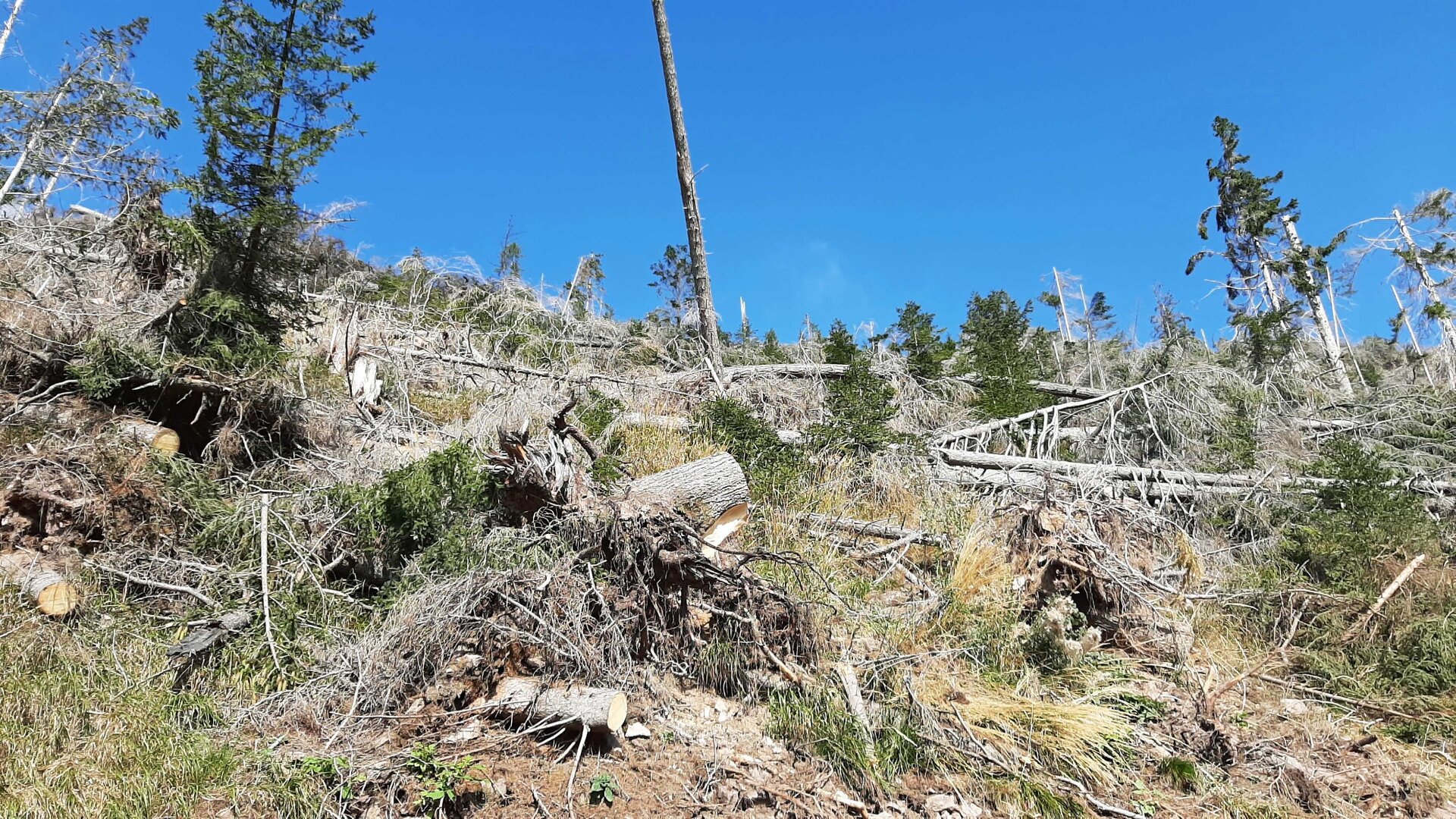

A walk to observe the natural dynamics of the forest.
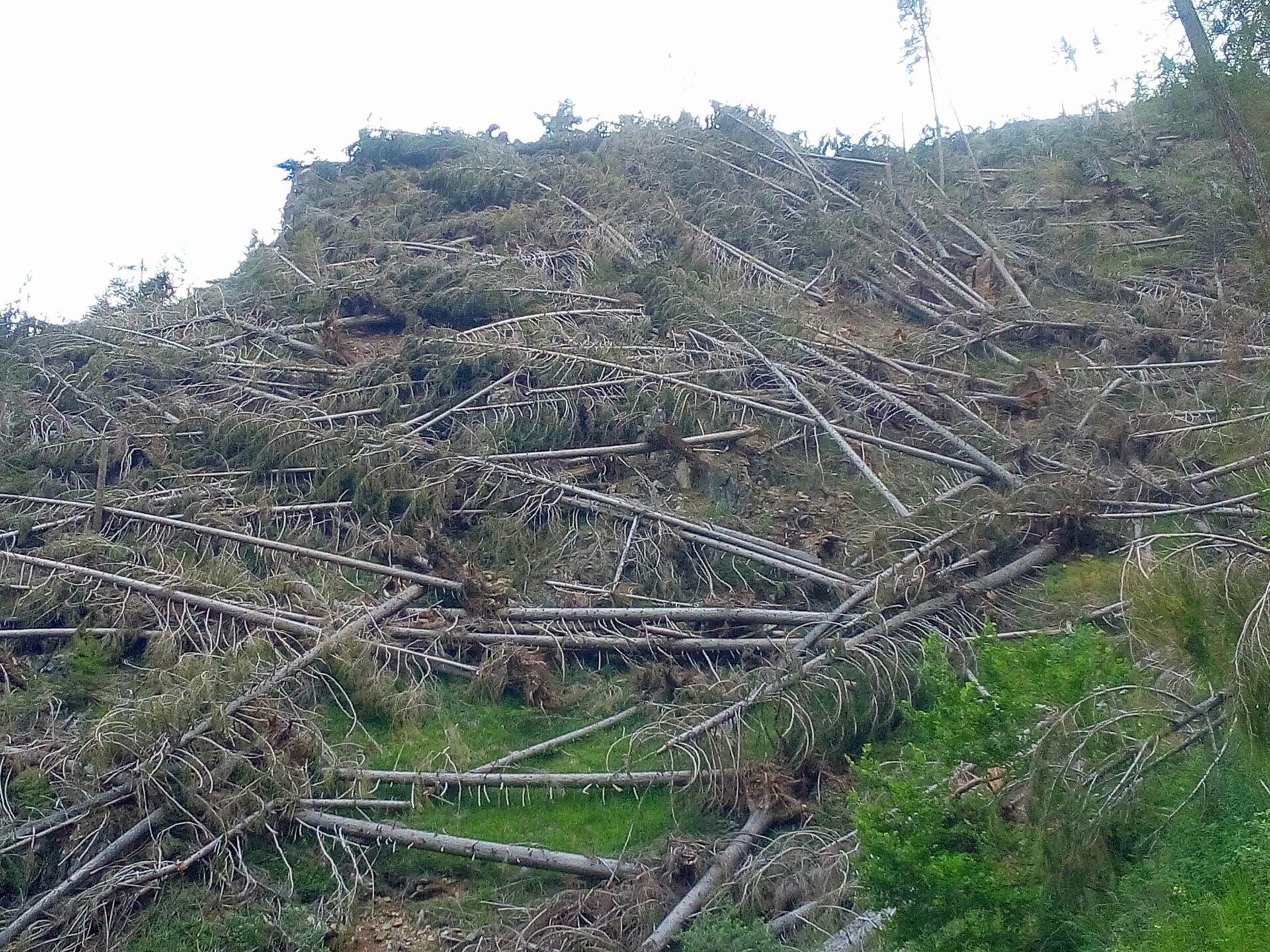
Oct. 26-29, 2018: storm Vaia hits northeastern Italy, crashing large areas of forests. More than 40,000 hectares of forest felled or heavily damaged, at least 20 million plants landed. The Fiemme Valley is among the hardest hit areas.
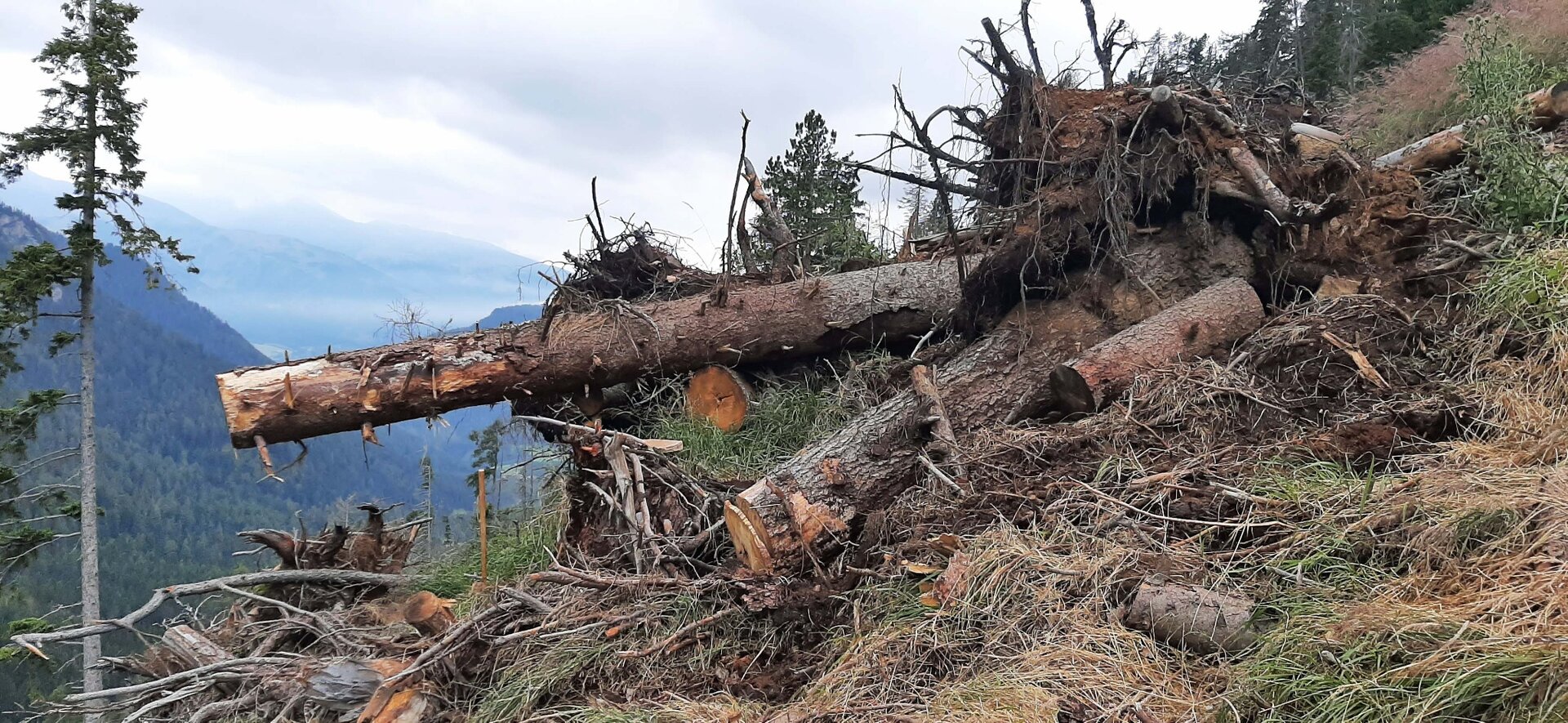
The forest landscape is being disrupted with whole slopes covered with lying plants. Urgent is the recovery of timber but even more so to give safety against possible rockfall and avalanches to the villages and roads that are downstream of the slopes where the forest has been felled.
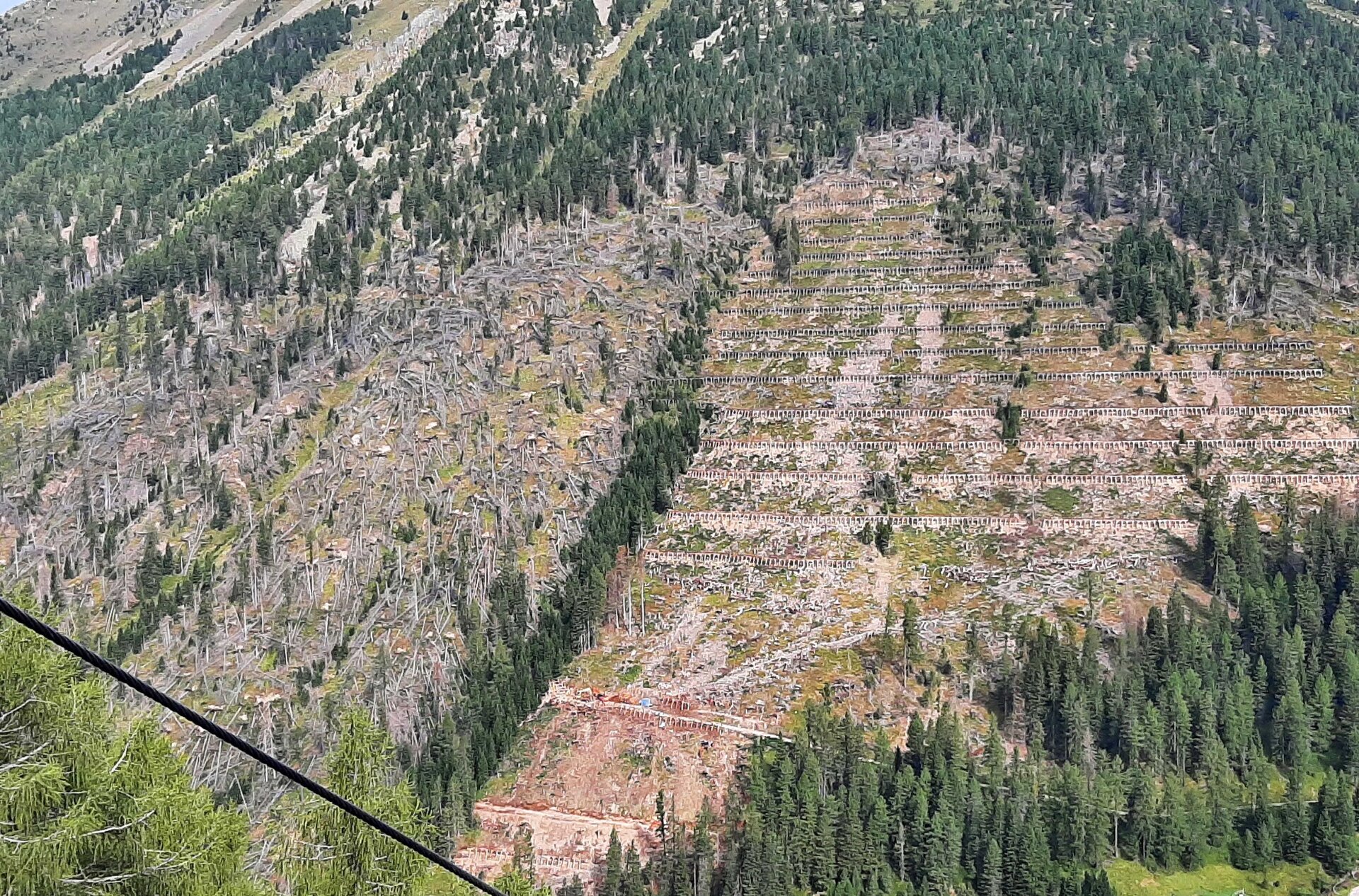
In the areas at risk, defense works such as rockfall nets, reinforced earth mounds and avalanche guard works have been implemented, which in most cases have involved the removal of landed plants and the subsequent artificial replanting of the forest.The "Trozo vecio" forest area, where the forest protected the Lavazè Pass highway from the danger of avalanches, was identified as a typical area where such protection was entrusted not to the construction of artificial works but to the forest itself.
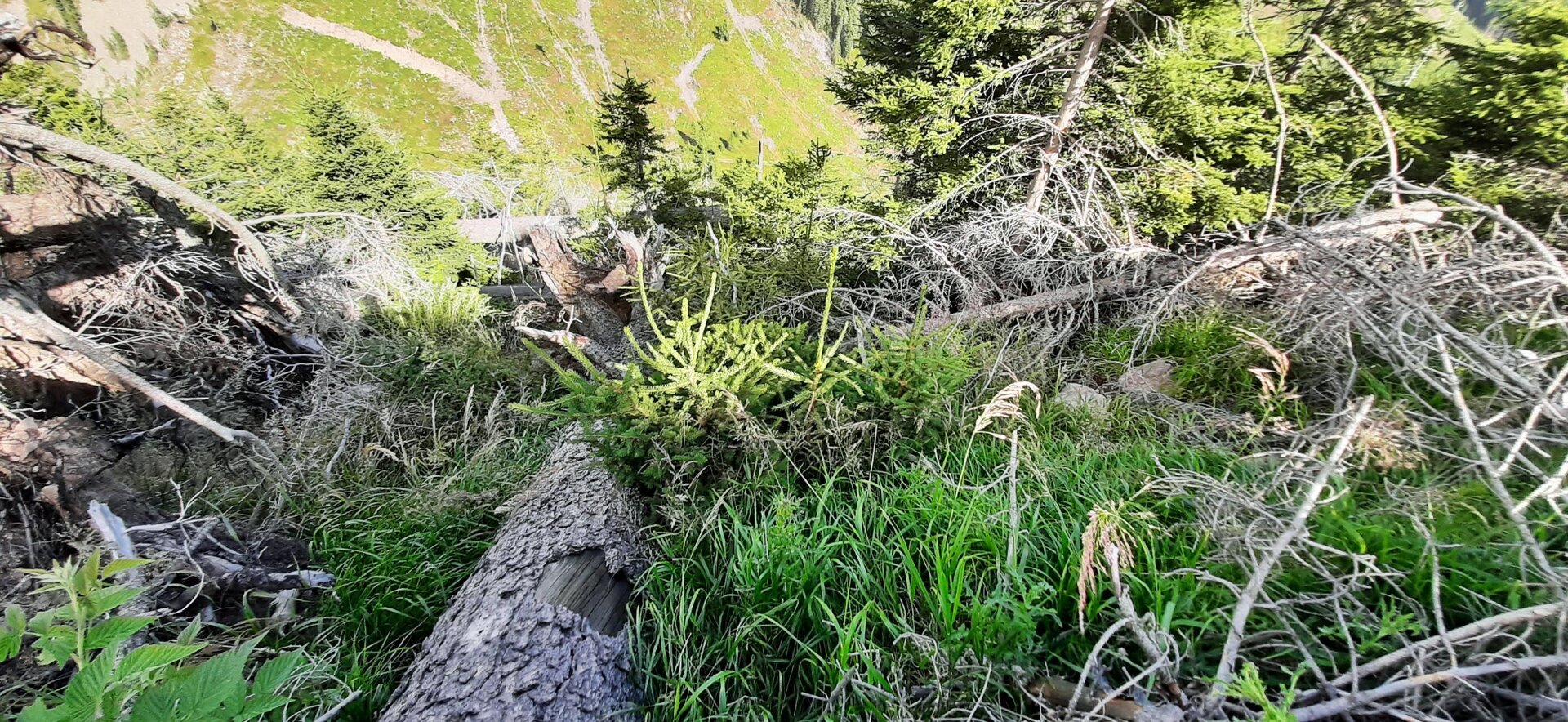
The current narrative in the immediate post-Vaia period was that of the forest "disappearing," of the forest "being gone." In reality, the forest has simply changed, going through a new phase, with the ground plants still performing for a variable but not short time certain functions, including that of ground cover and protection, moving toward a new cycle with the natural settlement of the new generation.
In the case of the Trozo vecio area, it was evaluated that releasing the ground forest could maintain its avalanche protection function for a long time and allow succession to the new forest already emerging. This resulted in significant economic savings and gives greater security of stability to the future forest.
The trail built on the slope allows for a close look at the evolution of the forest over time and study its timing and dynamics.
For a more detailed exposition of the natural phenomena taking place in the area click here
To see an article related to the protective functions of the forest and in this area click Sherwood Magazine pages 28 - 31
Idea and text by Bruno Crosignani